
Keep Your Septic Tank Working!

Garbage disposals and septic systems don’t always clash, but they also don’t work together seamlessly. This mainly depends on how a septic system is built and what it is designed to handle daily.

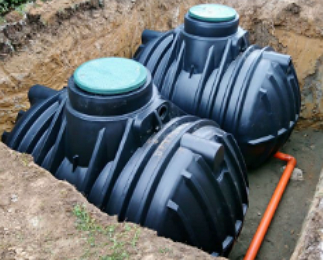
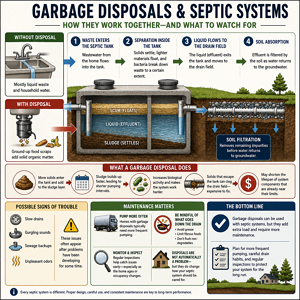
A septic tank isn’t a grinder or treatment plant like some people think. Wastewater from the house flows into the tank. Here, solids settle while lighter materials float. The liquid part then moves on to the drain field. Inside the tank, bacteria begin breaking down the waste, but only to a certain extent. Anything that doesn’t break down stays until the tank is pumped.

A garbage disposal alters this situation. Instead of mostly liquid waste and regular household water, you introduce ground-up food scraps. Even though the bits are small, they are still solid organic matter. This matter settles in the tank and adds to the sludge layer at the bottom. Over time, this layer builds up faster than the system was designed to handle.

The drain field also plays a role. When more solids enter the tank, there’s more biological activity, forcing the system to work harder to separate and process wastewater before it reaches the soil absorption area. If solids manage to get past the tank—often due to overloading or poor maintenance—they can clog the drain field. This is a costly issue to fix, as repairs often require significant work.

During inspections, it’s common to find garbage disposals in homes with septic systems, even if the system is older or smaller than today’s standards. Sometimes the system handles it well for a while. Other times, it just shortens the lifespan of components that are already near their limits.

In inspection work, a common pattern with septic systems that heavily use disposals is shorter pumping intervals. A tank that normally needs pumping every few years may require service sooner. Homeowners often don’t notice this until slow drains or backups appear, and by then, the problem has usually developed for some time.

Maintenance becomes crucial. A septic system can handle some disposal use, but it needs more frequent pumping and extra attention to what goes down the drain. Grease, fibrous foods, and anything that breaks down slowly worsen the situation. Even with light disposal use, the added load needs to be considered over time.

In practice, the conclusion is clear. Garbage disposals aren’t automatically a problem in septic homes, but they do affect how the system should be maintained. If they are installed, it’s important to recognize that the system may need more frequent upkeep and closer monitoring, especially as the home ages or the number of occupants changes.