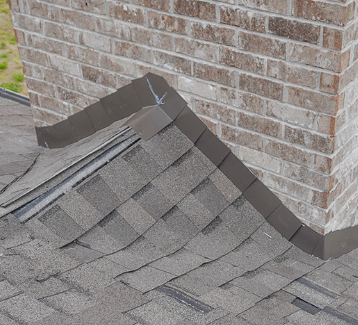
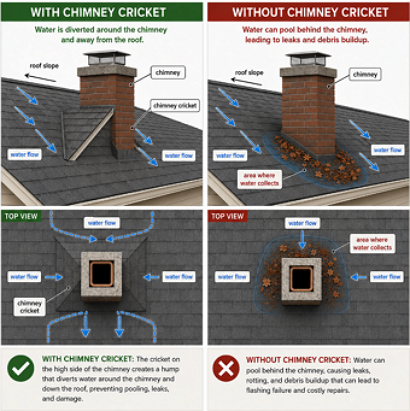
In inspection work, it’s not just about whether a cricket is there but how it was installed. The slope needs to be steep enough to move water. If it’s too flat, it won’t be effective. The connection points matter too. The cricket should connect properly to the chimney flashing and roof covering to prevent water from getting behind it. When these details are overlooked, the cricket may be present but not doing its job well.
It’s also common to see older homes without any crickets, especially where building practices were different at the time. In these cases, you often notice more staining, debris buildup, or signs of past repairs in that area of the roof. Sometimes crickets are added later during reroofing, but their effectiveness depends on how well they’re integrated into the existing system.
From an inspection standpoint, the main concern is always water management. The area behind a chimney is inherently vulnerable. A cricket can help reduce that vulnerability, but only if it’s the right size, properly sloped, and correctly flashed into the roof system.