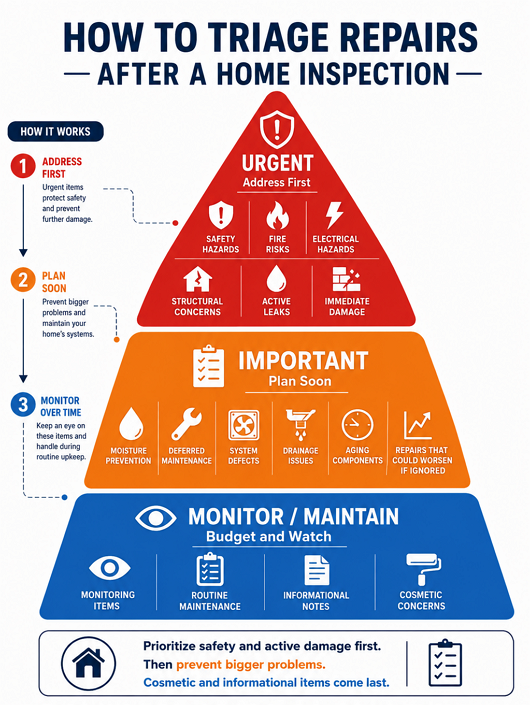
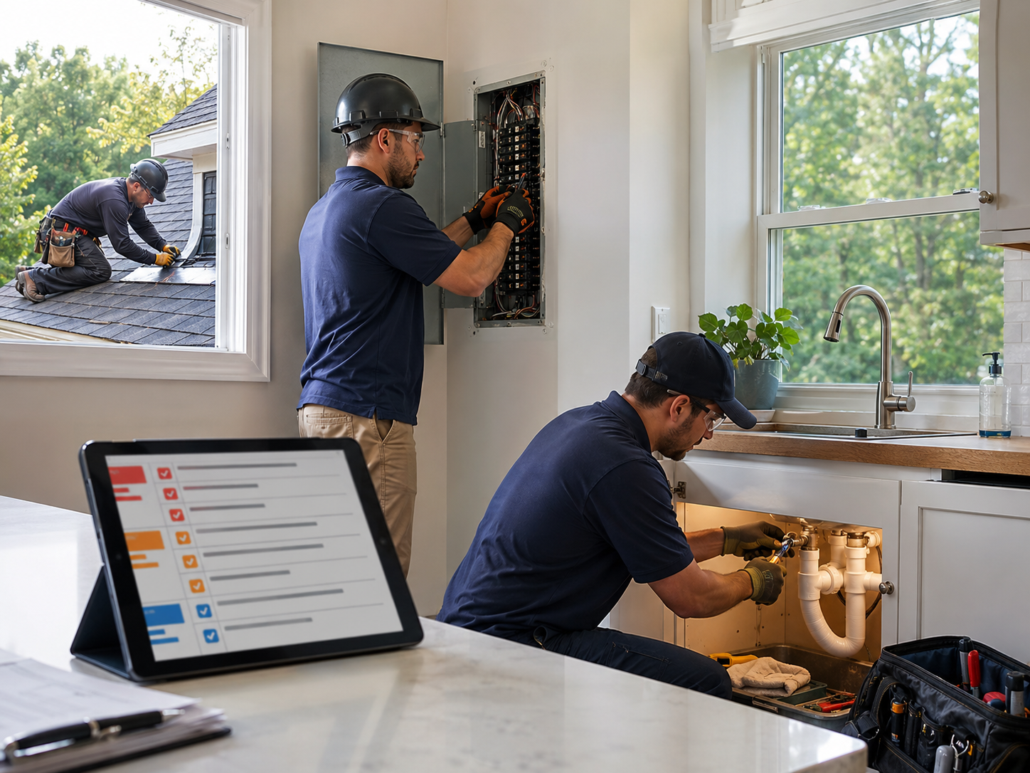
Prioritize by Risk, Not Just Color
Color coding is the first pass. After that, think about risk.
1. Safety Comes First
Anything that could hurt someone belongs near the top of the repair list.
Examples include unsafe stairs, missing handrails, electrical shock hazards, fire risks, gas concerns, missing smoke or CO detectors, broken garage door safety features, and fall hazards.
Even a simple repair can be high priority if the consequence of failure is serious.
2. Address Active Moisture Problems Quickly
Moisture is one of the most destructive forces in a home.
Active leaks and water intrusion can lead to rot, mold-like growth, damaged insulation, flooring damage, ceiling damage, pest activity, and expensive hidden repairs.
Pay close attention to roof leaks, plumbing leaks, wet crawlspaces, damaged flashing, poor grading, leaking windows or doors, and high moisture readings.
Moisture problems rarely fix themselves.
3. Do Not Delay Fire or Electrical Concerns
Electrical defects are easy to underestimate because many are hidden.
Prioritize issues involving overheating components, improper wiring, open junction boxes, missing covers, damaged conductors, unsafe panels, missing GFCI/AFCI protection, or water near electrical equipment.
For electrical concerns, BullsEye typically recommends evaluation and repair by a licensed electrician.
4. Fix the Cause Before the Cosmetic Damage
Do not repaint a ceiling before fixing the roof leak above it.
Do not replace damaged flooring before solving the plumbing or moisture issue that caused it.
A good repair order is:
- Stop the source of damage.
- Confirm the area is dry and stable.
- Repair damaged materials.
- Handle cosmetic finishes last.
Fixing symptoms before causes is how homeowners waste money.
5. Look for Patterns
A report is not just a punch list. It can show patterns.
For example, clogged gutters, short downspouts, negative grading, crawlspace moisture, and wood decay may all point to one larger drainage problem.
Likewise, multiple minor electrical issues may suggest amateur work or outdated wiring practices.
Patterns help you solve the real problem instead of chasing symptoms.
6. Build a Simple Repair Plan
After reviewing the report, group findings into three buckets.
Repair Immediately
These include safety hazards, active leaks, fire risks, electrical hazards, major system failures, and conditions causing ongoing damage.
Repair Soon
These include important defects that should be corrected but may not be emergencies, such as minor roof defects, damaged siding, moderate drainage issues, loose toilets, aging components, or appliance defects.
Monitor and Maintain
These include aging systems, minor cracks, cosmetic deterioration, routine maintenance, and lower-priority observations.
This makes the report useful instead of overwhelming.
7. Use the Right Professional
Some repairs are appropriate for a capable homeowner or handyman. Others need a specialist.
Common examples:
- Electrical: licensed electrician
- HVAC: HVAC professional
- Plumbing: plumber
- Roof: roofer
- Structural concerns: structural engineer or qualified structural professional
- Wood-destroying organism concerns: pest/WDO professional
- Chimney/fireplace: chimney professional
Cheap repairs become expensive when they are done wrong.
8. Pay Attention to Limitations
Limitations explain what could not be fully inspected and why.
Examples include stored belongings, low crawlspace clearance, finished surfaces, unsafe roof access, utilities being off, locked rooms, or blocked panels and appliances.
A limitation does not mean a defect was found. It means visibility or access was restricted.
If the area is important, follow-up access or additional evaluation may be needed.