Why the Area Behind Chimneys
Matters More Than You Think

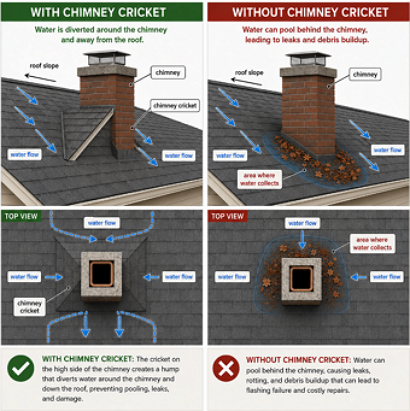
A chimney cricket is a small structure built on the high side of a chimney where it meets the roof slope. It looks like a small peaked roof and is designed to divert water so it doesn’t pool behind the chimney.

The area behind a chimney is a common trouble spot on a roof. Without a cricket, water flowing down the upper slope slows down when it hits the back side of the chimney. Instead of flowing down the roof smoothly, it can gather in that space. Over time, standing water increases the risk of leaks, especially at flashing joints and where different materials meet.

Debris often collects there as well. Leaves, pine needles, and small branches can get trapped behind the chimney and hold moisture against the roofing surface. In North Carolina, where there are many trees and frequent heavy rain, this combination of moisture and organic buildup can speed up wear in that area.

A well-built cricket changes how water and debris move. Instead of letting everything collect behind the chimney, it directs the flow to either side, helping water continue down the roof. Even a small cricket can make a big difference in how quickly that area dries out after it rains.

In inspection work, it’s not just about whether a cricket is there but how it was installed. The slope needs to be steep enough to move water. If it’s too flat, it won’t be effective. The connection points matter too. The cricket should connect properly to the chimney flashing and roof covering to prevent water from getting behind it. When these details are overlooked, the cricket may be present but not doing its job well.

It’s also common to see older homes without any crickets, especially where building practices were different at the time. In these cases, you often notice more staining, debris buildup, or signs of past repairs in that area of the roof. Sometimes crickets are added later during reroofing, but their effectiveness depends on how well they’re integrated into the existing system.

From an inspection standpoint, the main concern is always water management. The area behind a chimney is inherently vulnerable. A cricket can help reduce that vulnerability, but only if it’s the right size, properly sloped, and correctly flashed into the roof system.

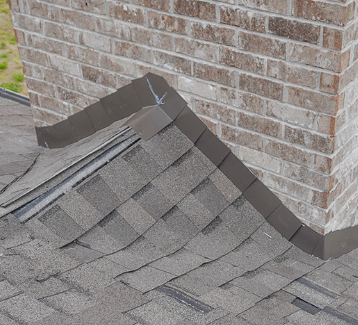
Another issue that arises during inspections is how easy it is to overlook early signs of trouble in that spot. From the ground, a chimney cricket can appear fine even when the flashing behind it is starting to fail. Small gaps or lifted edges might not become apparent until there’s staining inside or moisture has seeped in for a while. That’s why this area gets extra attention during inspections, especially on older roofs or homes where tree cover keeps the roof damp longer after it rains.